At Hyderabad Prime Multispeciality Clinic, recognized as the Best Multispeciality Clinic in LB Nagar, we prioritize quality and innovation in healthcare.
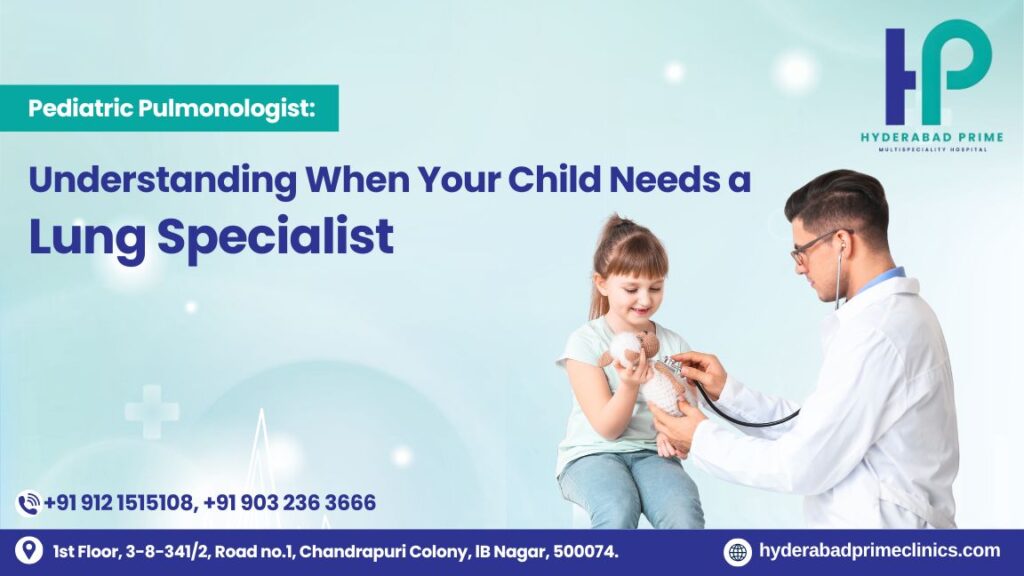
Pediatric Pulmonologist: Understanding When Your Child Needs a Lung Specialist
For parents, it is always concerning when a child has any breathing problems. It could be chronic cough, asthma, or persistent chest infections. These ailments needs to be treated with utmost care. That is why a pediatric pulmonologist exists – these are the professionals who are trained in treating lung and breathing problems in children of all ages.
In this article, we will discuss the roles of pediatric pulmonologists and walking through their treatment plan. We will learn when to see one, what conditions they commonly treat, as well as the steps through which they can improve your child’s life.
Who Is A Pediatric Pulmonologist?
A pediatric pulmonologist is trained to deal with breathing problems of all levels of difficulty as a child lung physician. Like all other doctors, they start with medical school and work with children in a pediatric residency before delving into pediatric pulmonary medicine which involves specialized training. With this training, they can take care of simple to complex life threatening breathing problems.
Common Conditions Treated by Pediatric Pulmonologists
Problems such as asthma and pneumonia, along with other ailments, are widespread among children. Pediatric Pulmonologists work to find a cure as soon as possible, since these lung problems are common:
Asthma
Chronic Wheezing as well as coughing and shortness of breath are signs of asthma, one of the most prevalent respiratory diseases.
Chronic Cough
For every cough your child has for over four weeks, a pediatric pulmonologist must be consulted.
Cystic Fibrosis
Cystic fibrosis is a genetic disorder that inflicts immense harm on one’s lungs and digestive tract. A pediatric pulmonologist can help manage your child’s condition over time.
Recurrent Pneumonia or Chest Infections
If your child suffers from pneumonia and bronchitis repeatedly, there may be an underlying health issue that requires more thorough evaluation.
Sleep-Related Breathing Disorders
Obstructive sleep apnea and other related disorders, especially in children who tend to snore and have disturbed sleep.
Cystic Fibrosis Congenital or Structural Lung Abnormalities
Certain congenital deformities of lungs require special evaluation and some children need expert access to function well.
Signs Your Child May Need a Specialist
Trouble with frequent wheezing or shortness of breath.
Cough that is chronic or difficult to control.
Snoring and disturbed sleep related to breathing.
Breathing difficulties during exercise.
Lung infections recurring frequently.
Abnormal chest X-ray or CT scan results.
If you’re referred from the pediatrician for further evaluation, don’t hesitate to visit the pediatric pulmonologist.
What to Expect During a Visit
In the initial appointment, the pediatric pulmonologist is expected to:
Examine your child’s medical background
Conduct an examination
Conduct a physical exam and order additional lung function tests, chest X-rays, or even allergy tests of the patient is warrant.
Discuss diagnosis and treatment plans tailored for your patients.
They may also coordinate care with other providers such as allergists, ENT doctors, or sleep specialists depending on the situation.
How Pediatric Pulmonologists Help
Provide accurate diagnosis with advanced testing
Develop individualized treatment strategies which may include inhalers, some other medications, or oxygen therapy.
Instruct parents and other professional caregivers on condition management at home.
Track lung function and growth of children longitudinally.
Support better long term respiratory health and overall quality of life.
Conclusion
Pediatric breathing difficulties warrants specialized care from a pediatric pulmonologist to manage and treat respiratory conditions effectively. Moreover, early intervention greatly aids in faster recovery while mitigating long term repercussions. If your child exhibits persistent breathing problems, secure specialized care — because every breath matters.